

Dear Partners in Health,
The desire for sweetness is built into our human biology. We are wired to seek it out, to use it as a source of quick energy, and to find comfort in the taste of something that feels rewarding. Over time, that instinct has collided with modern food science, creating a world where sweetness is everywhere—often even without the calories traditionally associated with sugar. For many years, non-sugar sweeteners were offered as the healthier answer: sweetness without weight gain, pleasure without guilt, a simple swap that promised better health. As the data has been gathered, the story has become more nuanced. This week, I want to walk us through what we truly understand about these sweeteners, cane sugar, and long-term metabolic well-being.
What Non-Sugar Sweeteners Actually Are
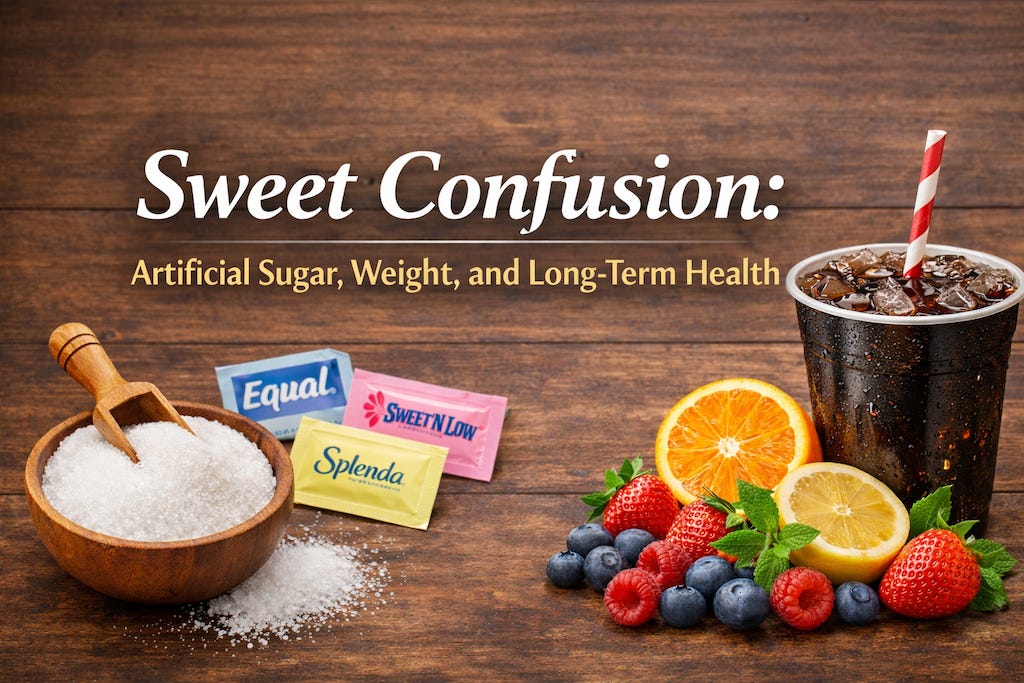
Non-sugar sweeteners (NSS) include familiar names many Partners in Health recognize—products such as aspartame (Equal), sucralose (Splenda), saccharin (Sweet’N Low), acesulfame potassium often labeled as Ace-K, and newer plant-derived extracts like stevia and monk fruit. They appear in diet sodas, flavored waters, yogurts, protein shakes, chewing gum, and packaged foods marked “sugar-free” or “zero sugar.” Their purpose is straightforward: to replace sugar and reduce calories. Early studies suggested they could help with weight control, and for decades they became woven into the routines of people trying to manage diabetes, avoid weight gain, or simply make healthier choices.
What the Research Shows About Metabolism and Weight
As more long-term data has emerged, the scientific community has reached a more cautious conclusion. Research from many countries shows that while NSS reduce sugar intake in the moment, the long-term metabolic benefits are inconsistent. Many adults who switch to these sweeteners do not see the weight changes they expect. Some even experience increased appetite and compensatory eating later in the day. The body interprets sweetness as a signal that energy is coming, and when those calories never arrive, certain individuals are left hungrier, more snack-prone, or craving additional carbohydrates. This explain why long-term outcomes are not what was originally expected.
Several large observational studies have noted associations between regular use of NSS, especially in drinks, with a higher risk of developing type 2 diabetes, cardiovascular disease, and stroke over time. These studies do not prove that the sweeteners themselves cause illness but highlight patterns that deserve attention. In 2023, the World Health Organization reviewed decades of evidence and advised against using non-sugar sweeteners as a strategy for long-term weight management. The concern wasn’t that NSS cause immediate harm, but that these sweeteners don’t deliver the benefits people expect and may lead to unintended metabolic changes in some individuals.
How Cane Sugar Affects the Body
This leads many Partners in Health to wonder whether returning to cane sugar is the safer answer. Cane sugar has the benefit of being familiar and predictable. It raises blood glucose as expected, prompts an insulin response, and delivers the calories the body anticipates. That predictability, however, does not translate to long-term benefit. Regular cane sugar contributes directly to elevated blood glucose, higher insulin demands, and metabolic overload. Over time, frequent intake promotes fatty liver disease, weight gain around the midsection, and increased inflammation. The association between excessive sugar consumption and chronic disease is one of the most consistently documented findings in nutritional science.
Even modest elevations in daily added sugar increase the risk of type 2 diabetes, hypertension, and cardiovascular disease. Liquid sugar—found in sodas, sweet teas, and flavored beverages—creates some of the fastest and highest glucose spikes, overwhelming the body in a way solid foods do not. For many people, shifting away from added sugar is a foundational step toward improving metabolic resilience.
Are “Natural” Sweeteners a Better Choice?
Many Partners in Health gravitate toward stevia or monk fruit because they sound more natural, and their metabolic profiles are indeed gentler than traditional sugar. It is important, however, to understand what these products really are. The versions sold in packets or added to beverages are not the raw plant leaf. They are highly purified extracts, such as steviol glycosides, processed to remove bitterness, stabilize sweetness, and improve taste. They are often blended with other ingredients like erythritol or dextrose to create a more familiar sweetness profile.
Regulatory agencies, including the U.S. Food and Drug Administration, consider these purified extracts safe when used within established limits. They do not raise blood glucose, and they are less likely to drive cravings compared to some older sweeteners. Still, they are best viewed as tools for transition rather than long-term fixtures. Their plant origin does not make them entirely “whole,” but they offer a gentler metabolic footprint while someone is reducing their reliance on traditional sugar.
Diet Sodas and “Zero Sugar” Drinks
Diet sodas and zero sugar drinks are perhaps the most common place NSS show up. Many colas contain blends of aspartame with Ace-K; others use sucralose paired with Ace-K. Newer brands use stevia or monk fruit to soften the taste and create a product that tastes closer to cane sugar. These beverages remove a substantial sugar load and can be a meaningful step for someone who typically drinks several regular sodas each day.
Diet sodas and zero-sugar drinks are perhaps the most common place non-sugar sweeteners appear. Many colas contain blends of aspartame with Ace-K, while others use sucralose paired with Ace-K. Newer brands use stevia or monk fruit to soften flavor and create a product that tastes closer to cane sugar. These beverages remove a substantial sugar load and can be a meaningful step for someone who typically drinks several regular sodas each day.
Replacing sugar with diet beverages does not, by itself, eliminate all health concerns. The acidity can still erode tooth enamel, and sweetness—whether from sugar or non-sugar sweeteners—may reinforce cravings. Diet drinks are often most helpful as a stepping-stone rather than a long-term substitute, as we try to shift toward less sweet drinks.
How to Navigate Food Labels with More Ease
Understanding sweeteners becomes simpler when we rely on what labels actually tell us. In the U.S., manufacturers must list added sugars in grams on the Nutrition Facts panel. This number is reliable and gives a clear picture of how much sugar has been included. Non-sugar sweeteners, on the other hand, must appear in the ingredient list by name (aspartame, sucralose, Ace-K, stevia extract, monk fruit extract) but the amount used does not need to be listed.
For practical purposes, reading labels with two quick steps can be helpful:
Look at added sugars first to understand the sugar content.
Then scan the ingredient list to see whether NSS are used to create sweetness.
This approach keeps things simple while still empowering you to make intentional decisions.
A Healthier Relationship with Sweetness
There is no perfect sweetener. The goal is not to replace one form of sweetness with another indefinitely. The most supportive long-term strategy is to gradually reduce how sweet our daily foods and drinks need to be. Taste preferences adapt quickly. Cutting the amount of sweetener in coffee or tea by a quarter each week, shifting to unsweetened beverages more often, and choosing whole foods with naturally mild flavors helps retrain the palate in a gentle and sustainable way.
For those who want some sweetness while adjusting, a few options tend to support metabolic health more effectively:
Stevia-based extracts without heavy fillers
Monk fruit extract
Allulose, a low-calorie sweetener that does not spike blood glucose
These are not meant to replace sugar permanently but rather to ease the transition as we gradually build a healthier baseline.
Closing Thought
Sweetness has always been part of the human experience, but modern life has amplified it far beyond what our biology was built to handle. Our paths should be to focus on less added sugar, a decreased dependence on intense sweetness, and a gradual return to foods that nourish. As the science evolves, one message remains steady: reducing sweetness in all forms supports metabolic health, stabilizes energy, and protects long-term vitality.